

Mon Rovîa: The Voice of Afro-Appalachia
Biography of Resilience and Identity and Sonic Healing
Subject: Mon Rovîa (Janjay Lowe)
Place of Birth: Monrovia, Liberia
Genre: Afro-Appalachian Folk/Indie-Folk
Major Works: Bloodline (2026), Act 4: Atonement (2025), “Big Love Ahead”, “Heavy Foot”, “Winter Wash 24”
Prologue: The Boy Who Remembered

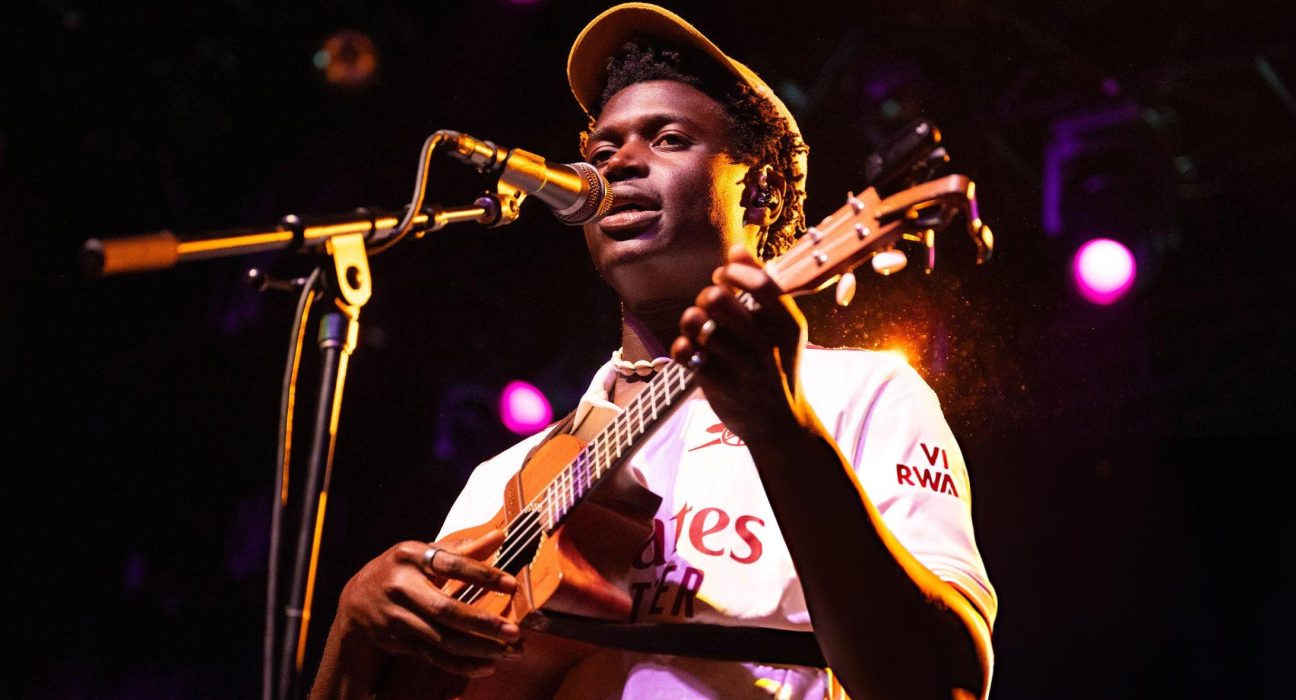
In the mist covered foothills of Chattanooga, Tennessee, a new sound began to emerge at the beginning of the 2020s, and this sound could not be easily defined or categorized. It was a bright, fragile and intimate plucking of the strings on a Ukulele layered over the weighty voice of a man from two continents. This was not simply Indie-Folk, this was a sound that spanned the Atlantic, connecting the red earth of the American South with the memories of war in West Africa. This was Mon Rovîa.
Janjay Lowe was born in Monrovia, Liberia, the capital city of Liberia, and by 2026, when his first studio album Bloodline was released, he had established himself as one of the most compelling voices of his generation. Mon Rovîa has created a new genre of music called “Afro-Appalachian”, which defines his own experiences as a displaced person from Liberia, and the lives of others like him, as a new type of folk music.
His journey is an example of how a person can survive, find a way to heal, and then express their healing through a radical form of joyful vulnerability. To understand Mon Rovîa is to understand the journey of a refugee who would not allow his trauma to quiet his song.
“Smoke of Monrovia”
Janny Lowe’s journey to becoming a musician began during the Second Liberian Civil War. He was born in Monrovia in the late 1990s. His early life was not as peaceful as the beautiful landscapes that he sang about later. Instead, it was filled with war and its loud sounds of violence. The land of Liberia, which was originally founded by African American former slaves from America, was at war with itself.
The few details about the early life of Mon Rovîa have been shaped by his traumatic childhood experiences. He was born into a family whose life was destined to be forever changed by war and violence. When his mother died during the war, she would be remembered for decades to come in songs such as “Black Cauldron,” which would eventually be an expression of her death. For many years after, Janjay’s biological father would be a ghostly figure in his mind, however he would eventually find out about his Senegalese heritage and the fact that he had a father he would never know.
Janjay became one of the lucky children when at just seven years old, he was separated from his biological siblings and taken to live with white American Christian missionaries while the war raged on in West Africa. He was airlifted out of the smoke-filled skies of Monrovia and left behind his name, culture, and bloodline.
The decision to separate Janjay from his biological siblings would ultimately shape his later experiences of survivor’s guilt, described by Mon Rovîa as a constant, but silent voice asking, “Why me?” and “Why did they choose me to survive?”
Strangers In A New World
It was an abrupt shift for someone who had grown accustomed to the sounds of gunfire and the smell of smoke to move to the neatly groomed peacefulness of the American religious world. The family that adopted Janjay relocated often and took him on a whirlwind journey across the western hemisphere—through the muggy heat of Florida; through the expansive sky of Montana; through the island of the Bahamas; and, eventually, into the green hills of Tennessee.
As a young black child growing up within a white, Evangelical missionary family, Mon Rovîa experienced a type of isolation that is both unique to him and one of the most significant factors in his sense of “cultural homelessness”. In his interviews Mon Rovîa has discussed at length the time of isolation, when he grew up in private Christian schools and was thus isolated from the larger Black/African American culture. At the same time, among his white friends and classmates, he became known as the “token Black kid”, and therefore he had difficulty blending in and becoming part of the larger Black American community.
He was an outside observer and learned how to blend in by speaking “properly”, and by being the “safe” Black boy, who wouldn’t upset the existing order.
In a 2025 interview, Mon Rovîa recalled his experience of being viewed as a “white Black person”: “kids like me — they’re very lonely.”
Mon Rovîa’s experience of religion, was the only constant in his life. His adopted father was a minister, and his home was the church which gave his life a rigid structure.
Though he would later struggle with the complexities of religious belief (the nature of a God who chooses to intervene in the lives of some people and not in the lives of other people), his first exposure to music as a spiritual tool came through the musicality of the church; hymns, harmonies, and the collective power of singing together were all elements of his early experience of music as a spiritual force.
The Mask and the Mirror
Janjay was searching for an image of himself during the 2000s as a teenager growing up in the Bahamas and then in Tennessee, when he came across the music that would create a connection to the world around him. His foster brothers had introduced him to the indie folk giants of the late 2000’s and early 2010’s such as Bon Iver, Fleet Foxes, and Vampire Weekend. He found a sense of reflection in the melancholy and acoustic qualities of this music. His introspection and internal quietness were reflected in the falsetto vocals and lyrics of these bands.
Janjay has said that he was told by the world that folk music is not something he should do. “If you are a Black American, then you have to go towards that (hip hop/R&B) some how,” he remembered thinking when speaking about the pressure he felt to be performing hip-hop or R&B. Janjay spent many years wearing a musical mask. He attempted to transform his trauma into beats and bars through his work in trap, melodic rap and alternative R&B. He had released early work under his name, but it felt like a costume – ill fitting and performative.
Janjay attended Covenant College at Lookout Mountain, Georgia on a soccer scholarship and was attempting to lead a traditional American college experience. However, the ghosts of Liberia haunted him every step of the way. The cognitive dissonance he experienced of being involved in a beautiful, peaceful mountain area and remembering the children soldiers from his country caused a split in his psyche. He knew himself as Janjay the student and Janjay the athlete; however, he still did not know who he was.
The Ukulele and The Algorithm
In 2020, the COVID-19 Pandemic forced the world to come to a halt, removing the distractions of everyday life and forcing millions of people to isolate. This silence during this time period, for Janjay, was a crucible.
With his thoughts and free from the social expectations to “do” blackness in a certain way, Janjay picked up a ukulele. An instrumental that is often considered too small and toy-like, but in the limitations of the ukulele, he was able to find freedom. He started to play simple, repetitive chords, hum melodies that were both ancient and new, and eventually began to write songs.
He stopped making trap beats. He stopped trying to be cool. He made simple videos of himself singing in his room, just him and a ukulele with a soft, brutally honest voice. He posted those videos on TikTok.
The algorithm, which is often criticized for being shallow and superficial, saw the genuine honesty in Mon’s sound. The video went viral. People who scrolled endlessly looking for funny dance or skit videos came across Mon Rovîa and were stopped dead in their tracks. His voice has been described by fans as “healing” and “medicinal.” It provided solace to a world suffering collectively from trauma.
This is when Mon Rovîa completely accepted the name he chose for himself. By calling himself after the place where he was born he was reclaiming his past. He wasn’t running from his origins, he was embracing them. He was letting his ancestors and the sister he left behind know that he hadn’t forgotten.
What is Afro-Appalachian?
As Mon Rovîa’s fanbase continued to grow (over a million listeners on Spotify and over 300,000 social media followers), Mon Rovîa articulated what his art project was going to be about: Afro-Appalachian Folk.
More than a marketing label, Mon Rovîa felt like Afro-Appalachian Folk was a historical correction. Living in Tennessee, Mon Rovîa found out the history of the banjo.
Mon Rovîa discovered that the banjo was not originally a white, hillbilly instrument, but rather a descendant of West African lutes (such as the akonting) brought to the Americas by enslaved Africans. The “twang” of Appalachian music was at it roots African.
In this location, Mon Rovía placed himself. Rovía combines elements from traditional American Southern storytelling with the rhythmic and melodic elements of West African Music. This is reflected in the characteristics of his sound:
Instrumentation: Minimal – often no more than a Ukulele, Banjo, or Acoustic Guitar; there is plenty of room for the vocalist’s voice.
Vocals: Ethereal – a soft, gentle range that has drawn comparisons to Cat Stevens and Justin Vernon (Bon Iver); however, Rovía’s voice is different due to its huskiness.
Production: Atmospheric – Swells of synthesizer, ambient sounds, and “field recording” techniques used to create a sense of a particular time and space in which the listener exists.
This was how he could enter the Folk venues — the Newport Folk Festival and the Grand Old Opry — not as an outside person asking to be let in, but as a descendant claiming his rightful heritage.
Personal Relationships And What Makes Them Special
To truly know Mon Rovîa’s personal relationships you must look past the gossip rags as Mon Rovîa is very tight-lipped when it comes to his dating life. At this point in time, 2026, there is no reported spouse or boyfriend/girlfriend for Mon Rovîa. Nevertheless, Mon Rovîa’s life is filled with deep and complex relationships that help drive his creativity and art.
Family Love Story
The most defining love story for Mon Rovîa is that which exists between him and his biological family. For decades he had them as memories. Although, over the last few years he has been reunited with his sister in Liberia; that reunion wasn’t limited to an emotional connection alone. He used that reunification as a springboard for much of the music on his 2026 album Bloodline; in fact, in the intro to “Whose Face Am I”, he uses an audio recording of his sister speaking to him in Kolokwa (Liberian English) telling him about his dad; bridging the gap between the man Mon Rovîa is today and the boy Mon Rovîa once was.
Adoptive Family Dynamic
Mon Rovîa’s connection with his adoptive family can be seen as a complicated sense of appreciation. He clearly articulates how his adoptive family saved his life during a war and gave him the opportunity to have a better life, however; he also talks about some of the challenges he experienced during his childhood including the strictness of the religion and the loss of his own culture and identity due to being adopted by a white family. Some of this is reflected in his song “Black Cauldron,” which shows Mon Rovîa working through his feelings of anger and frustration related to the challenges he has faced since he lost his cultural identity and was placed into a family that looked nothing like him.
Brotherhood
Eric Cromartie (his manager and friend) has played a major part in Mon Rovîa’s journey. Cromartie encouraged Mon Rovîa to share his music on TikTok when Mon Rovîa felt like quitting music and thought there was no room for his soft folk songs in the music world. This is another example of the people in Mon Rovîa’s life that are providing him with witnesses (people who believe in him and see the truth of who he is before he believes it himself).
Audience as Confidant
Mon Rovîa has possibly the closest relationship he has is with his fans. Mon Rovîa calls his community a space for atonement and healing rather than a fan base. His concerts are reported to be spiritual experiences, and many times he has eliminated the boundary between him and the audience. Mon Rovîa has been open about his struggles with mental health, depression and suicidal thoughts, and has formed a bond of extreme vulnerability with his audience.
The Works — Atonement and Bloodline
By 2024-2025 Mon Rovîa was no longer an online secret. Mon Rovîa signed with Nettwerk Music Group, a record label known for developing independent folk artists.
Atonement (EP, Jan 2025)
Atonement signaled the conclusion of his “EP period,” and prepared listeners for the eventual release of the full-length record. It featured many tracks that would be included on Bloodline including “Winter Wash 24”. The song, “Winter Wash 24”, directly reflected his experiences as a refugee; and was co-written by Mon Rovîa with the International Rescue Committee (IRC), who helped to provide him with access to resources in order to create this body of work.
Through this track he aimed to express the lack of interest by Western nations in providing aid to people affected by global crises (“we’re witnessing horrors on our phones”) and asked the listener to regain their connection to their humanity.
Bloodline (Album, Jan 2026)
Mon Rovîa’s first major album, Bloodline was released in January 2026. Bloodline is 16 tracks long and can be viewed as his life story. “Heavy Foot” is one of the most popular tracks from Bloodline and became a rallying cry for social justice. The track is a contrast of an upbeat, foot-stomping melody against the lyrics of government oppression and police violence (“and the government / is staying on heavy foot”). In doing so, it demonstrates Mon Rovîa’s ability to write protest music that is enjoyable to listen to, much in the same way that people enjoy singing along to songs while sitting around a campfire.
“Crooked the Road” is a heartfelt ballad about the non-linear process of recovery from trauma.
“Running Boy” is a heart-wrenching reflection on police encounters and the inherent fear in Black bodies in America, which Mon Rovîa traces back to the boy running from war in Liberia.
“Somewhere Down in Georgia” is a haunting exploration of the American South, and acknowledges the “ghosts” of slavery that walk the fields he now calls home.
The album established Mon Rovîa as a serious artist working in the medium of the album, rather than simply creating viral music snippets. Critics praised the “arresting serenity” of the album and the manner in which Mon Rovîa addressed uncomfortable truths gently.
The Road Ahead
As of February 2026, Mon Rovîa is standing at a crossroads. He has lived through a civil war, navigated the complexities of the foster/adopt system in America, and successfully entered a music industry that historically has worked to exclude voices like his in the folk genre.
The artist’s ongoing work with the IRC will continue to be an opportunity for him to use his platform in support of the over 120 million displaced people worldwide. He has stated that his goal is to one day return to Liberia, not simply as a visitor, but as a man who is whole enough to look into the soil that gave birth to him.
Mon Rovîa’s bio story is still unfolding, but the chapters that have been written thus far give us a significant lesson: Identity is not something that is provided to you; it is something that you construct. He is neither purely Liberian nor purely American. He is Mon Rovîa – a citizen of the sound that he has created and invites everyone else to listen to the quiet yet powerful voice of survival.
Discography Timeline: Key Albums/Projects
2020: Sunburnt (EP) – The earliest experimentation with music.
2021: Dark Continent (LP) – The Alternative / R&B era.
2023 – 2024: The Acts (EP Series) – The emergence of an acoustic style.
2025: Act 4: Atonement (EP) – The evolution of his musical sound.
2026: Bloodline (LP) – His first studio LP and commercial peak.
Appendix: The Themes of the Music
Themes: Survivor’s Guilt, Transracial Adoption, Colonialism, Mental Health, The Global Refugee Crisis.
Instrumentation: Ukulele, Banjo, Acoustic Guitar, Synthetizer.
Influences: Bon Iver, Fleet Foxes, Cat Stevens, West African Highlife (roots), Appalachian Bluegrass.


