

Xiuhtezcatl Martinez – The Young Voice of a Generation

Introduction
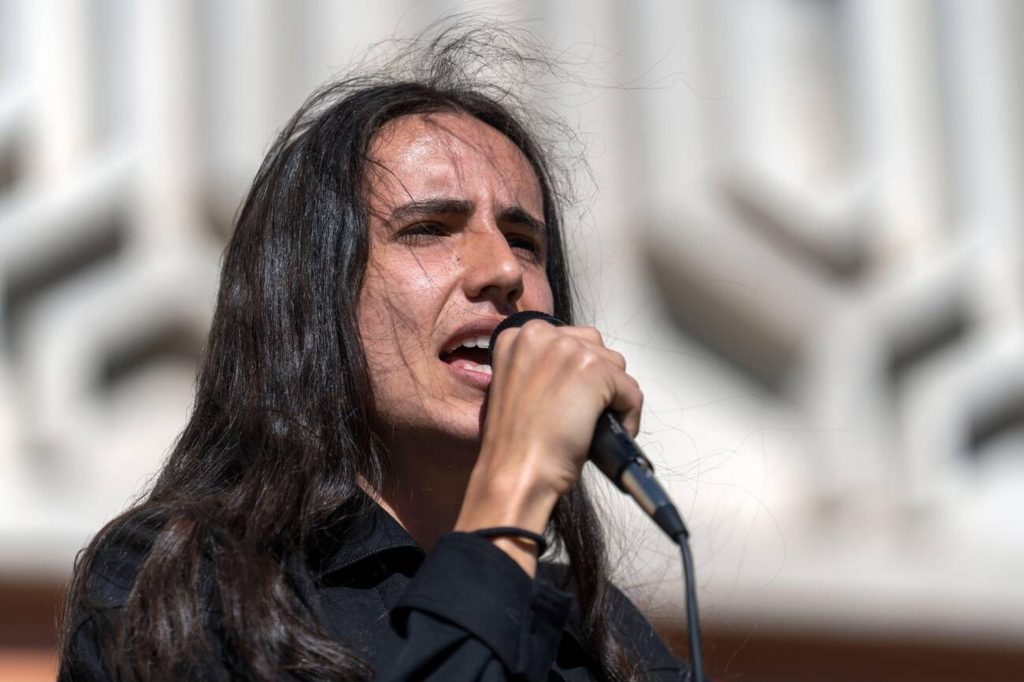
Few people have had the ability to bridge the divide between native cultural knowledge and mainstream culture as well as Xiuhtezcatl Martinez. As an emerging rapper, author, and youth activist, Martinez has spent nearly all of his life at the forefront of the climate crisis. Martinez is not simply a member of the conversation surrounding our planet’s future, he is also one of the most prominent voices shaping the discourse for “Generation Z”.
As a child named after the Nahuatl phrase “Turquoise House”, Xiuhtezcatl embodies both traditional heritage and urgent futurism. Xiuhtezcatl rose to international prominence as a plaintiff in the landmark lawsuit Juliana v. United States which sued the U.S. Federal Government for failing to ensure the nation protects the climate for future generations. Martinez’ story however is much more than a story of courtroom battles and UN speeches, rather it is a story of how an emerging artist found his voice through music, grappled with the pressure of being a “child savior”, evolved into a multi-faceted artist using the rhythms and rhymes of music to de-colonialize the narrative of environmentalism.
This biography will follow the path of Xiuhtezcatl Martinez from the time he gave his first speech at age 6 to becoming an internationally recognized icon changing the definition of what it means to be a warrior for the planet in the 21st century.
Native Heritage and Early Life

Xiuhtezcatl Martinez was born on May 9th, 2000 in Boulder, Colorado. Boulder is a town with progressive values and surrounded by mountains. Martinez’ childhood however would not resemble that of other children in many ways. Martinez was raised by parents who saw activism as not only a calling but a sacred duty.
He grew up with two parents who instilled their own values into him. His mother, Tamara Roske, was an environmentalist and she started Earth Guardians in 1992. She initially opened it as a high school in Maui, Hawaii; however, she moved Earth Guardians to Boulder, Colorado, and it has been there since then. His father, Siri Martinez, is of Aztec (Mexica) heritage and instilled Xiuhtezcatl in the ways of his ancestors. From birth, Xiuhtezcatl was raised in the Mexica tradition and learned that the earth (Tonantzin) was alive, not a resource to use for personal gain, but something to respect.
His dual upbringing shaped his views on the world. Through his mother, Xiuhtezcatl gained knowledge of how to organize and learn about the science behind ecology. Through his father, he gained a deep understanding of the spiritual cosmology of the Aztecs, which teaches the connectedness of all life. He was told he had a duty to be a guardian of the land, and this became the foundation upon which he built his activism.
As a young boy, Xiuhtezcatl lived in the wilderness of Colorado. He spent much time as a young boy playing in the forest of Colorado and developed a strong physical and emotional bond to the natural world. However, his childhood was cut short when at the age of six, after viewing a film about the current condition of the planet, he experienced extreme sadness. He felt a deep sorrow because he realized that the world he knew and loved was being destroyed.
Rather than protecting him from these harsh realities, his parents were very supportive of his desires to speak-out on those issues. At age six, he delivered his first speech in front of his hometown. On top of a crate to be able to reach the mic, he delivered a speech so clear and full of conviction that the crowd fell silent. As an adult, the speaker would have spoken with cynicism, however as a child, he had the moral certainty that most adults lose as they grow-up and know the difference between right and wrong. “The world has a fever and we can heal it,” he said.
The Boy Who Spoke To the World
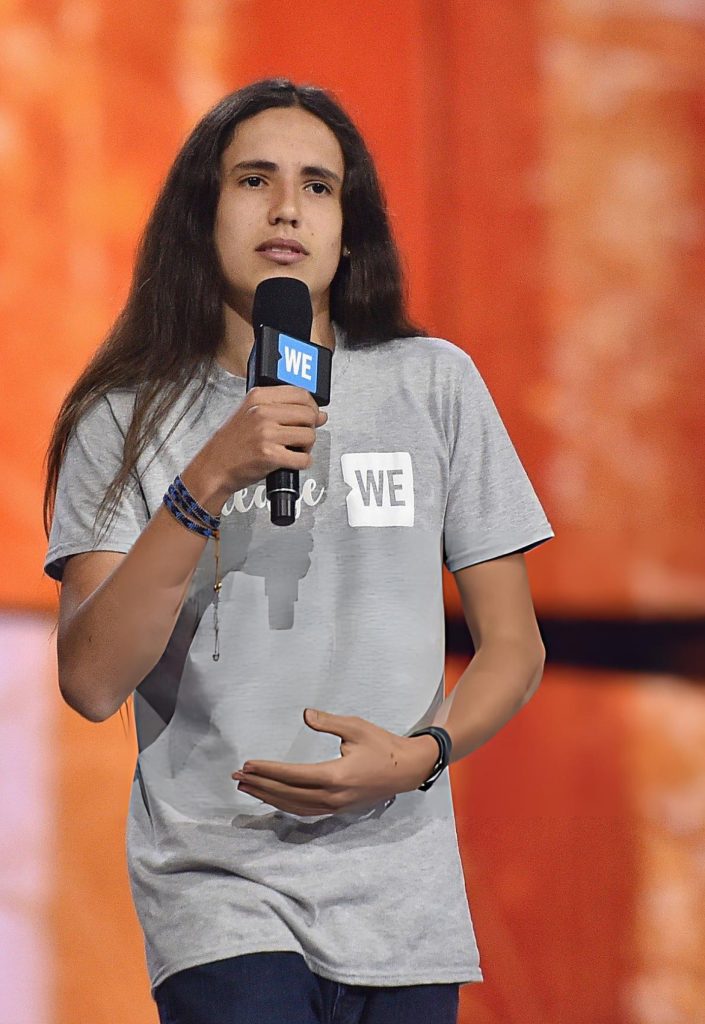
By the time he was a pre-teen, Xiuhtezcatl had become a seasoned activist. He transitioned Earth Guardians from being a local initiative to becoming a global youth led initiative. During his tenure as the Youth Director for Earth Guardians, the organization grew to include thousands of crews in over 60 different countries, giving young people the tools and resources needed to create change in their own community.
His initial activism was practical and local. He did not just talk about melting ice caps; he battled against local threats. He and other youth activists won a victory when they convinced the Boulder City Council to ban the use of pesticides in city parks, because they felt the chemicals were bad for kids and pets. In addition to fighting the use of pesticides, he also fought to limit coal ash disposal and frackings in Boulder county. While local victories are important, they provided Xiuhtezcatl with proof that change is possible and young people have political power.
At the age of twelve, in 2012, he went to Rio de Janeiro to attend the Rio + 20 UN summit. This marked a pivotal moment in time. As world leaders were negotiating non-binding agreements in air conditioned meeting rooms, Xiuhtezcatl was addressing the youth on the streets, and in side bars, calling them to action. One of the youngest speakers at the summit, Xiuhtezcatl’s presence served as a harsh reminder of the stakes. He was not talking about economic forecast – he was talking about his own survival.
The world took notice of his ability to communicate the climate crisis as an issue of human rights. Charismatic, articulate and very proud of his indigenous roots, he often appeared on stage dressed in traditional Aztec regalia, visually emphasizing that the solution to the climate crisis lies in the wisdom of the past.
At the age of fifteen in 2015, he spoke to the United Nations General Assembly in New York City. Using English, Spanish and Nahuatl to speak to the delegates, he gave a speech that would be viewed by millions. “We stand at a crossroad,” he said. “It is our decision what path we will choose.” The young man challenged the delegates to cease playing politics with his future. His words defined him as the face of the global youth climate movement years before Greta Thunberg became a household name.
Juliana v. United States

One of the most significant aspects of his advocacy work began in 2015 when he joined twenty other young individuals from across the U.S. in filing a landmark lawsuit against the U.S. government, Juliana v. United States. Represented by Our Children’s Trust, the twenty-one plaintiffs claimed that the federal government had knowingly violated their constitutional rights through its failure to address climate change and allow the fossil fuel industry to continue operating.
Beginning with the fact that Xiuhtezcatl was not simply an individual on the court docket, he was a central figure in the litigation, as well as co-lead plaintiff Kelsey Juliana, referred to in the filing documents as the “guardians for future generations.” The lawsuit was brought using the public trust doctrine, which asserted that the federal government has a fiduciary obligation to preserve essential natural resources, including the atmosphere, oceans, and climate, for all citizens.
This case was historic because it was not solely about regulating the environment. It was about the fundamental rights to life, liberty, and property. The plaintiffs argued that the disproportionate impact of climate change to young people, who will be responsible for dealing with the consequences of the government’s lack of action, is sufficient to establish standing under the law. The plaintiffs produced extensive documentation showing that the government knew about the dangers of climate change for decades and chose to support the interests of the fossil fuel industry instead of taking action to mitigate those impacts.
Xiuhtezcatl testified to the personal devastation he experienced from the devastating wildfires in Colorado, the pine beetle infestation destroying the forests he grew up loving, and the chronic asthma he developed due to the air pollution he is exposed to. In addition, he stated that the loss of his cultural heritage through the destruction of the traditional plants and animals upon which his tribe relies is being accelerated by climate change.
The litigation process was lengthy and difficult. Despite facing multiple obstacles and the repeated efforts of the defendants to have the case dismissed, the plaintiffs persevered. The litigation drew international attention and inspired similar litigation in other nations. Ultimately, in 2020, the Ninth Circuit Court of Appeals dismissed the case on the basis that the plaintiffs did not suffer a concrete injury and therefore lacked standing to bring their claim. However, in dissent, the judges argued that the plaintiffs had clearly suffered a concrete injury and that the judiciary should intervene.
Although the plaintiffs lost their case, Juliana v. United States represented a win.
Climate Justice Case Shifting The Narrative:
This case changed the way people thought of climate change; by turning this issue into a Human Rights Violation and giving a new generation of youth activists the opportunity to use the Legal System as a means to create change. By being a part of the case Xiuhtezcatl established himself as a leader who would challenge authority to achieve his goals.
Earth Guardians & Global Leadership
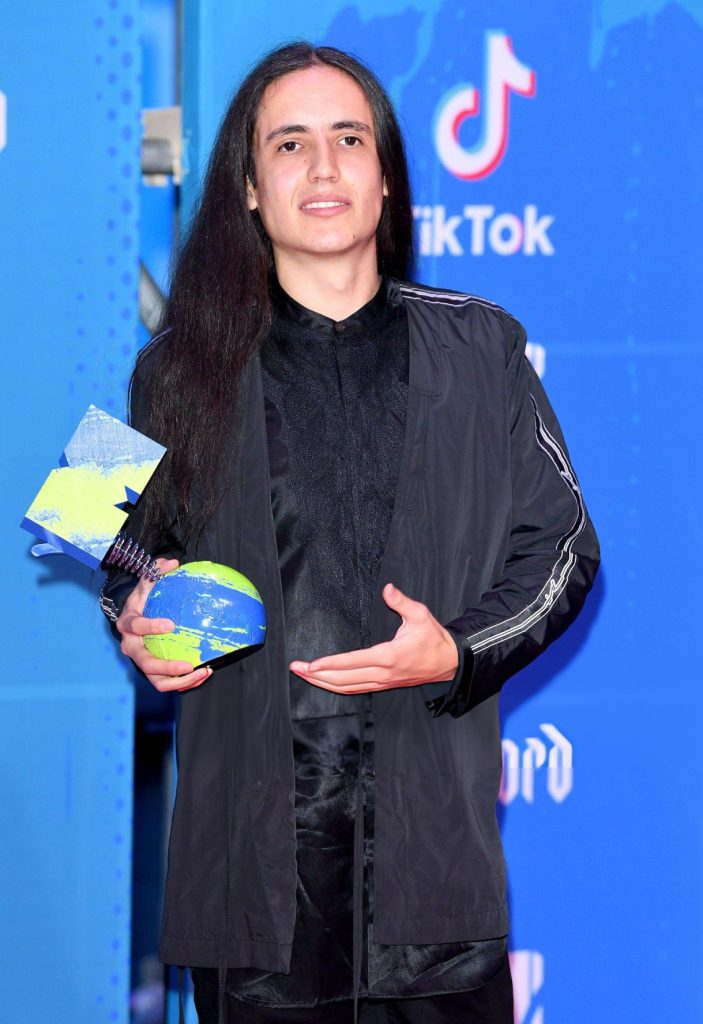
During the time Xiuhtezcatl was working through the court battle he was still leading Earth Guardians. At this time Earth Guardians was growing at an exponential rate. What had started out as a small group of kids on Maui had now grown into a global organization of youth activist focused on environmental and social justice.
Earth Guardians were not just a protest organization; they were an empowerment organization. They empowered youth to become leaders within their community. Xiuhtezcatl traveled all over the world and spoke at schools, conferences and festivals and told youth to find their own voice and to take action on those things that are important to them. Some examples of what Earth Guardians did include, fighting plastic pollution in Bali, advocating for indigenous rights in the Amazon and organizing climate strikes in Europe. Earth Guardians gave youth the platform and resources to be able to create change.
Xiuhtezcatl’s leadership style is very inclusive and empowering. He knows that the climate crisis is not just an environmental issue but it is a social justice issue. He believes that one of the most important things is intersectionality. He explains how climate change has disproportionate effects on marginalized communities such as, indigenous peoples, peoples of color and low income families.
Xiuhtezcatl also understands the power of storytelling. He encourages young activists to tell their own story and to connect emotionally with people. He believes that simply presenting people with facts and figures will not inspire people to take action, people need to feel something.
Xiuhtezcatl utilized Earth Guardians to create a feeling of community and a sense of unity among young activists. He provided an area where they could find common ground, generate new ideas, work together on projects and learn that they are not alone in the fight, but rather, they are part of a global movement toward positive change.
Art As A Weapon — The Music Career
As Xiuhtezcatl made headlines as an activist, he was also beginning to develop another passion: music. He started writing songs when he was seven years old and hip-hop at twelve years old. To him, music was not merely entertainment; it was a weapon of mass communication and resistance.
To him, hip-hop was the ideal way to get his message across. It was the language of the youth; a genre born from struggle and resistance. With his lyrics, he could communicate with those individuals who may have never attended a climate conference, nor would ever take the time to read a scientific study. He could communicate directly to their heart and mind.
In 2018, he released his first full-length album, Break Free which clearly demonstrated his duality as both an activist and an artist. This album included collaborations with artists such as Nahko Bear and Shailene Woodley blending consciousness within his lyrics and catchy beats. Songs such as “Indigenous Roots” and “Speak for the Trees” were anthems for the climate movement, honoring indigenous cultures and advocating for environmental justice.
Although, Xiuhtezcatl’s music was more than simply a lecture to the choir, he wrote about identity, love and personal development. He rapped about the hardships of growing up in the spot light, the pressures of being a “savior,” and the tribulations of working through relationships. He was open and honest, giving the world a glimpse into the humanity of the activist.
He wrote two books: “Imaginary Borders” (2020), and “We Rise,” the Earth Guardian’s Guide to Creating a Movement to Save the Planet (2017).
“We Rise,” offers guidance to young people interested in organizing, creating a movement, and making a difference. He shares the lessons he learned about how to lead by example and how to be effective, and he provides specific actions to take. His goal is to empower young people to create positive change in their communities.
“Ideas and Philosophy”
In addition to being a songwriter/rapper and activist, Xiuhtezcatl is a prolific writer and philosopher. He has written extensively about the need to protect the environment and his vision of social change. He believes that the younger generation has the capacity to make significant positive changes if they work together and are empowered. This is evident in both of the books he has published.
The first book, “We Rise: The Earth Guardians Guide to Building a Movement That Restores the Planet” (2017), is a handbook for young activists. In this book, he shares his experiences and strategies for building a successful movement, as well as providing young people with tools and ideas to help them become leaders and effect positive change in their own communities.
His second book, “Imaginary Borders” (2020), takes a different approach. Rather than focusing on activism or social change, this book explores the challenges that Native American youth face in school and in society, and it encourages young people to think critically about the world around them.
Imaginary Borders is a more philosophical work than The Youth Climate Movement, which examines both the physical and metaphorical boundaries created through borders and how those barriers separate people. He believes that the climate crisis does not know borders and that we need to transcend the artificial borders separating us in order to address the global challenges facing humanity today. He is calling for a new type of activism that will be based in compassion, solidarity, and an understanding of the interconnectedness of all humans and the earth.
His philosophical views are heavily impacted by his Native American heritage. He frequently refers to the idea of “all my relations”, or the belief that all living beings are connected, including to each other, the land, and to all living things. He believes that the root cause of the climate crisis is a disconnection spiritually, or a lack of recognition of our interdependence with the natural world.
He is also emphasizing the necessity of de-colonizing our minds and our actions; he believes that we should challenge the dominant stories of progress and development and instead, seek out the wisdom of indigenous peoples that have lived in harmony with the earth for thousands of years. He is advocating for a just transition into a sustainable future, where the needs of the most vulnerable are respected and where the rights of nature are recognized.
Recent Years (2020-Present)
Xiuhtezcatl’s role as an activist and artist has evolved significantly in recent years. His focus has shifted away from the “hero narrative” that was a defining feature of his early career towards community-based initiatives and collective action. He understands now that it is not possible for any one person to “save the world” and that real change occurs at the grassroots level.
He is now also more outspoken regarding how climate justice and racial justice intersect. As the Black Lives Matter movement gained momentum, he took to his platform to show the linkages between environmental racism and police brutality. He said that there is no way we can solve the climate crisis if we do not address the systemic inequalities that exist within our society.
Xiuhtezcatl Martinez did not let the COVID-19 pandemic stop him. He used social media to keep in touch with his followers by holding virtual concerts and workshops. He still continues to speak at online conferences and events and shares his messages of hope and resilience.
In 2024, he was a featured speaker for the UBC Phil Lind Initiative and Illinois State University where he spoke on the power of storytelling and the importance of indigenous sovereignty. He also participated in an in-depth interview for Daybreak Star Radio where he reflected on his journey and the future of the climate movement.
His musical career is also thriving. He has toured all over the world and performed at numerous international festivals and venues. He has worked with musicians from many different cultures and backgrounds and uses his music to help bridge gaps and build understanding.
Legacy & Future
At the age of 25, Xiuhtezcatl Martinez has already made a lasting impact on the globe. He has motivated millions of youth to take action on climate change, challenged the most powerful governments and corporations on earth and redefined what being an activist in the 21st century will look like.
His impact on society is not merely through the many speeches he has delivered and the many legal battles he has fought; but rather by helping to establish the social movement he is a part of. He has proven that youth can be leaders now, not simply leaders of tomorrow. He has also shown us that we hold the power to create the world we want to live in, to create a world that is equitable, sustainable and vibrant.
Going forward, there is no indication that Xiuhtezcatl will slow down. He continues to work with Earth Guardians where he mentors the next generation of youth leaders. He continuously creates new music that explores new ideas and reaches new audiences. He continues to be an ardent advocate for indigenous peoples’ rights and environmental justice as well as uses his voice to amplify the voices of those whose voices are often ignored.
Xiuhtezcatl Martinez is a warrior for the earth, a poet of the people, and a visionary for a greater world. His story serves as a reminder that we all have a role to play in this transition; we all have the capacity to make a difference. In his song “One Day,” he states, “We are the ones we’ve been waiting for.”
Notable Achievements
• Youth Director, Earth Guardians: Developed the organization into a global movement with thousands of crews globally.
• Plaintiff, Juliana v. United States: Lead plaintiff in a landmark climate lawsuit against the U.S. federal government.
• United Nations Speaker: Spoke before the U.N. General Assembly when he was 15 years old.
• Author: We Rise (2017) and Imaginary Borders (2020).
• Musician: Released albums Break Free (2018), Voice Runners (2020), XI:XI (2021), and Tonatiuh (2025).
• Awards: United States Community Service Award (2013); Peace First Prize (2015); Nickelodeon HALO Award (2015); Children’s Climate Prize (2016); Time’s Next 100; Rolling Stone’s 25 under 25.
Discography highlights include
Break Free (2018)
Voice Runners (2020)
Runway Tapes (2020)
XI:XI (2021)
Tonatiuh (2025