

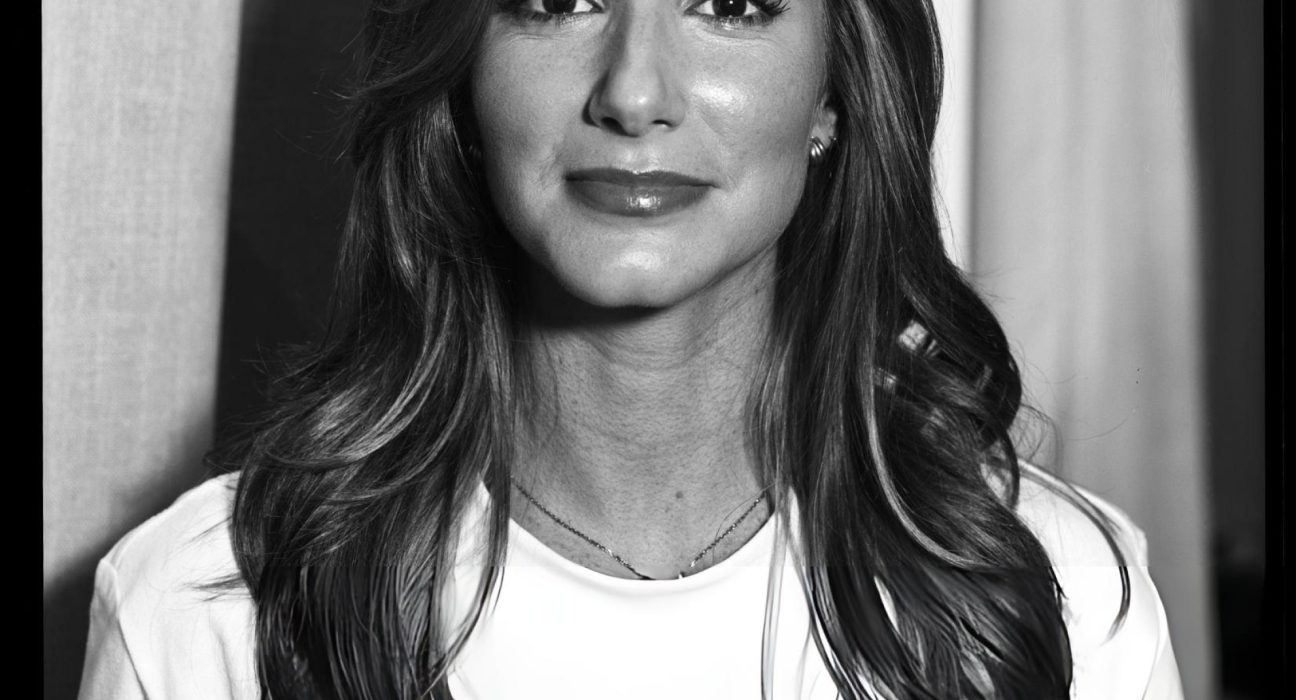
Luana Lopes Lara, now 29 years old, has taken the title as the world’s youngest self-made female billionaire, replacing Taylor Swift & Lucy Guo. Her transition from a professional ballerina to tech-founder was truly one of the most fascinating career changes in recent times. Luana Lopes Lara founded Kalshi, a platform allowing users to create markets predicting the future, from scratch, with Kalshi now valued at over $11 Billion and her net worth currently estimated at $1.3 Billion. This article will go over the details of her early ballet training, attending MIT, creating Kalshi, and achieving billionaire status prior to her 30th birthday.
Early Life and Career as a Dancer
Background and Early Training as a Ballerina
Luana Lopes Lara was born in Rio de Janeiro, Brazil where she grew up speaking fluent Portuguese. Her family raised her in the Catholic tradition which has taught her how to face difficult challenges, and she continued this practice through her school days by praying fervently before each exam. Although Luana no longer attends church each Sunday, she has continued to rely on her faith throughout her life for strength and support.
She is one of the only Brazilians to have made it into the billionaires list from Forbes.She is one of the only Brazilians to have made it into the billionaires list from Forbes.The pathway that Luana took from Rio to Silicon Valley began with a dance form that required a level of discipline that few people would ever experience.
Bolshoi Ballet School Training (Brazil)
Entering Bolshoi Ballet School in Brazil was probably Lopes Lara’s first big success. The school is a branch of Moscow’s Bolshoi Ballet; it is the only school affiliated with Bolshoi Ballet located outside of Moscow. Only one student is accepted for every 97 applicants to the school. In addition to this extreme competitiveness, the program required that students dance for 8 hours every weekday for 8 years .High school for Lopes Lara was probably the most demanding period of her life She had to go through all of her academic studies from 7 am to noon, then she would be involved in a 2 hour break before she went to her first class at 1 pm until 9 pm when her day ended. The environment of the school was so demanding on the physical level as well as the mental level. Many of the teachers used lit cigarettes underneath her thighs while she attempted to hold one leg up to her ear to see how long she could hold that position without burning herself.
The competition amongst the students was brutal and some of them were willing to do anything to get ahead of the others. Some students even placed glass shards in the other dancers’ shoes to cause them harm. It is this type of discipline and ability to put off immediate rewards that helped Lopes Lara make it through the long and arduous regulatory approval process of Kalshi.
Professional Ballet Dancer in Austria
After graduating in December, Lopes Lara worked as a professional dancer in Austria for about nine months. She was dancing at the Salzburg State Theatre when she made an important decision that changed the direction of her career completely. She retired her pointe shoes and moved to the United States to work towards a degree in computer science at MIT, exchanging the stage for another type of performance.
Career Path Change – Education and Career Pivot
The Road to MIT Computer Science
Lopes Lara went to MIT to follow her dream to be like Steve Jobs, after finishing her time as a professional ballet dancer in Austria. From the Massachusetts Institute of Technology, Lopes Lara received degrees in both computer science and mathematics. The courses were challenging and mentally demanding for Lopes Lara; however, she said that she found the training regimen at the Bolshoi to be the most physically demanding experience of her life.
At MIT, Lopes Lara researched at the Brain and Cognitive Science Center (BCCS), Computer Science and Artificial Intelligence Laboratory (CSAIL) and the Media Lab (ML). As each semester progressed, she solidified her knowledge in both theoretical mathematics and computational methods. Lopes Lara uses her background in engineering and computer science from MIT to lead internal functions at Kalshi.
Summer Internships at Elite Companies
In addition to her college coursework, Lopes Lara completed multiple summer internships at several elite companies on Wall Street. In total, she worked as an analyst and as a software engineer at Bridgewater Associates, a quantitative trader at Citadel Securities, and had short stints at Five Rings Capital.
Both of these experiences involved working under the guidance of two well-known figures in the world of finance — Ray Dalio at Bridgewater and Ken Griffin at Citadel — thus allowing her access to the highest level of financial market activity. Additionally, both jobs required the same high degree of precision and analytical ability that she developed from years of disciplined ballet training. Overall, she received significant hands-on experience in quantitative trading during those early summer months
Meeting Co-Founder Tarek Mansour

When Tarek Mansour met Lopes Lara at MIT , he was studying Computer Science , as well as other international students that were part of his friend group. He met Lopes Lara when they attended the same class and studied with many of the same students that were also studying computer science. Lopes Lara would sit in the front row of all of her classes so Mansour could be close enough to observe how she solved problems and they began developing a relationship based on that experience. Before attending MIT , Mansour spent time working in finance. He shared a common interest with Lopes Lara in finance and mathematics and many classes were taken by them together as a team and many papers were written by them as a team as well.
Kalshi’s founders, Lopes Lara and Mansour, built their partnership through a 2018 internship at Five Rings Capital, a NYC-based private equity firm. After hours spent walking back to their apartments after long nights working for Five Rings Capital, Lopes Lara and Mansour began discussing the fact that so many people were making financial decisions based on their predictions of what was going to occur; yet, there was no clear method to trade on those predictions.
They could never shake the feeling that they could create something meaningful together, utilizing the perfect combination of skills they each possessed.
Building Kalshi from the Bottom Up
The Prediction Market Concept
In 2018, Lopes Lara and Mansour created Kalshi with one primary goal: establish a lawful marketplace to allow individuals to trade in future events in the same manner that stock is traded . Lopes Lara and Mansour applied to Y Combinator in 2019 and were accepted into the program . Kalshi functions as an exchange, allowing users to trade contracts on future events with the price being the result of the collective opinion of the overall market regarding the probability of an event occurring.
The Struggle for Regulatory Approval
In order to obtain regulatory approval from the federal government, Lopes Lara and Mansour contacted over 40 different law firms. Unfortunately, every single firm refused to assist them due to their youth and the small size of Kalshi. It was ultimately Jeff Bandman, who previously served as a CFTC official, that agreed to provide guidance to Lopes Lara and Mansour on navigating the approval process. Kalshi needed to develop a full exchange, clearing processes and surveillance systems prior to having even one single user. As such, it took until November 2020 for the CFTC to grant Kalshi Designated Contract Market status, establishing Kalshi as the very first federally regulated exchange to be licensed by the CFTC to offer trading in event contracts within the United States.
Launch of the Kalshi Platform
In February 2021, Kalshi received $30 million in Series A funding from Sequoia Capital. The funding allowed Kalshi to launch the platform as a full-fledged trading environment in July 2021. Kalshi’s DCM approval gave it a competitive advantage over other competitors as it provided institutional traders, corporate analysts, hedge funds, and individual retail investors with regulatory certainty regarding their use of Kalshi’s platform.
The Election Contract Legal Battle
Kalshi self-certified Congressional Control Contracts in June 2023, but after a review by the CFTC, they were eventually banned from being traded on Kalshi’s platform due to the CFTC’s concern that the contracts would be used for gaming purposes or to harm the public interest. Despite the overwhelming opposition from investors, Kalshi’s founder, Lopes Lara, filed suit against the CFTC. On September 10, 2024, U.S. District Court Judge Jia M. Cobb found in Kalshi’s favor and ruled that the CFTC had acted beyond its statutory authority. On October 16, 2024, the D.C. Circuit denied the CFTC’s motion to grant an emergency stay and allow Kalshi to start offering the regulated election prediction market that has been prohibited for over one hundred years.
Becoming a Billionaire At Age 29
Kalshi Reaches $11 Billion Valuation
On December 6, 2025, Kalshi announced a Series E funding round of $1 billion at an $11 billion valuation. The funding round was led by Paradigm and included participation from Sequoia Capital, Andreessen Horowitz, Meritech Capital, IVP, ARK Invest, Anthos Capital, CapitalG, and Y Combinator. In just under six months, Kalshi’s valuation went from $2 billion in June 2025 to $5 billion in October 2025, and then doubled to $11 billion. Trading volume is now greater than $1 billion per week and has increased more than 1,000 percent since 2024.
Luana Lopes Lara net worth breakdown
Lopes Lara and Mansour will each have an estimated 12 percent of Kalshi, and based upon their 12 percent ownership stake of the estimated $11 billion valuation of Kalshi, Lopes Lara’s net worth will be approximately $1.3 billion. At the time she earned this milestone (age 29) it was the fastest accumulation of wealth in tech history. Kalshi is currently valued at the level of its venture capital valuations due to Kalshi being a private company.
Youngest Self Made Female Billionaire
At 29, Lopes Lara, also becomes the youngest self made female billionaire in the world. She takes this title away from Scale AI co-founder, Lucy Guo who was 31 years old. Prior to that, Lucy Guo took the title from Taylor Swift in April 2025 when Scale AI reached a valuation of $25 billion. Although Taylor Swift still has the title of the world’s wealthiest female musician, with a net worth of $1.6 billion.
Conclusion
Luana Lopes Lara’s journey from professional ballet dancer to billionaire entrepreneur; shows that the discipline you obtain in one area can translate to your ability to succeed in other areas.
Her experience with the Bolshoi Ballet training, attending MIT, battling regulatory hurdles, and creating a company valued at over $11 billion by the time she turned 29 is the evidence needed to show that unusual paths can lead to extraordinary results. Additionally, Lopes Lara’s experiences demonstrate that staying persistent despite multiple instances of rejection and having an unwavering vision for what you are trying to build is more important than your background or credentials when developing a revolutionary product or service.
FAQs
Q1. Before entering the field of tech entrepreneurship what was Luana Lopes Lara’s background? Luana Lopes Lara graduated as a professional ballerina after training at the Bolshoi Theatre School in Brazil for eight years (and practicing for 8 hours a day). She danced professionally for 9 months at the Salzburger Landestheater in Austria. Prior to becoming a professional dancer she studied computer science and mathematics at MIT.
Q2. How did Luana Lopes Lara and her co-founder develop the concept for Kalshi? Luana and her co-founder Tarek Mansour, who met while studying at MIT and worked together at a financial firm during internships, developed the idea of Kalshi while taking late night walks home from their internship at Five Rings Capital in 2018. They observed how so many financial decisions were made by attempting to predict future events and realized there was no method available for trading on these predicted outcomes; this realization led them to develop a legal prediction market platform called Kalshi.
Q3.
What sets Kalshi apart from all other prediction market platforms? Kalshi is the first prediction market exchange in the United States to receive Designated Contract Market status from the CFTC, providing federal regulation of an exchange, and to be specifically approved to trade “event contracts”, giving institutional traders, hedge funds, and retail investors the ability to legally participate in the trading of event contracts through Kalshi.
Q4. At what age did Luana Lopes Lara become a billionaire? Luana became a billionaire at 29 when Kalshi achieved an $11 Billion valuation in December of 2025 during the Series E funding round. Luana owns approximately 12% of Kalshi, therefore she has an estimated net worth of $1.3 Billion, placing her as the youngest self-made female billionaire in the world.
Q5. What challenges did Kalshi face in getting regulatory approval? Kalshi faced significant regulatory hurdles, with over 40 law firms initially rejecting their request for help due to the founders’ age and the company’s small size. They eventually secured assistance from a former CFTC official and had to build complete exchange infrastructure before having any real users. The approval process required extensive work on clearing mechanisms and surveillance systems before receiving federal authorization in 2020.