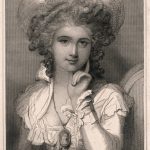


Elizabeth Parsons Ware Packard, a married woman’s rights advocate and mental asylum reformer, was wrongfully institutionalized in 1860 by her husband; after this she went on to become one of the leading advocates for the rights of married women and those institutionalized in insane asylums through her advocacy efforts which contributed significantly to the legal reforms that changed how insanity commitments were made and the rights of married women.
Early years
Her early years were spent in Ware, Massachusetts, where Elizabeth Parsons Ware was the oldest child (and only female child) of Rev. Samuel Ware, a Congregationalist minister and Lucy (Parsons) Ware. To provide his daughter with an educational experience which would be unusual for women in that era, Elizabeth’s father gave her the opportunity to attend the Amherst Female Seminary. The courses that Elizabeth took there included French, Algebra, Classics, Literature and Mathematics. During this time, she also had the influence of boarders from Amherst College, one of whom was Henry Ward Beecher who introduced her to new ways of thinking about religion.
Personal life
Elizabeth married Theophilus Packard Jr., a Presbyterian minister and a Calvinist (he was fourteen years older than Elizabeth) in 1839 to satisfy her parents’ wishes. They had six children together: Theophilus (born 1842), Ira Ware (born 1844), Samuel Ware (born 1847), Elizabeth Ware (born in either 1848 or after that year), and George and Mary (in some records). The Packards moved many times until they finally settled in Manteno, Illinois approximately between 1857-59. Over the years, Elizabeth’s religious beliefs became increasingly different from those of her husband who believed in a rigid form of Calvinism. Elizabeth supported abolition, questioned certain Christian doctrines, and taught Bible classes which were interpreted by her husband as being unorthodox. There were disagreements between the two regarding their children’s upbringing, financial issues and other matters. Theophilus believed Elizabeth’s independent thoughts demonstrated that she was insane.
Abuse of the Wrongful Commitment Statute
In June 1860, under an Illinois statute that allowed husbands to have their wives committed to institutions for insanity without either due process or hearings (with the exception of those requiring a court order for others) – Theophilus had Elizabeth committed to the Illinois State Hospital for the Insane at Jacksonville (now Jacksonville Developmental Center). He had an arrest warrant issued on his claim that Elizabeth had been “somewhat insane” for three years. She was evaluated by a Doctor who posed as a salesman during this time. She was at the institution for three years under Superintendent Dr. Andrew McFarland with little more than bare necessities provided for her and subjected to poor treatment while asserting her sanity. She documented the abuse and poor treatment of the patients at the hospital.
Trial Release
In 1863, with pressure from her adult children and friends, she was released on a document stating that she was “incurably insane”. When she returned home, she discovered that her husband had sold many of their belongings, removed the children, and confined her to a single room (by nailing down the windows) in order to have her committed again. Due to community support for Elizabeth, she filed a habeas corpus appeal. The jury at the five day trial in Kankakee county determined that she was sane in less than seven minutes of deliberation. As she defended herself very effectively, she presented all of the evidence available to her, which included neighbor and friend testimonies, as well as Dr. Duncanson’s testimony as an expert witness. Upon the conclusion of the trial, Theophilus left for Massachusetts with the remaining children and all of her belongings, using state laws to deny married women both property and child custody rights.
The Experience Translated to Advocacy and Reform
Packard’s experience led to a life of activism. She wrote and published several self-published books exposing the abuse that occurred in state mental health facilities and other issues such as marital inequality and the lack of protection afforded married women with regard to property and custody; these books were entitled, “Marital Power Exemplified” (1864/1866); “The Prisoner’s Hidden Life, Or, Insane Asylums Unveiled” (1868) and later republished as “Modern Persecution” (1873), and others. The money generated from book sales provided Packard with financial support. She also testified at legislative hearings in multiple states, founded and led an organization known by some as the Anti-Insane Asylum Society; this organization advocated for reforms in the areas of:
Jury trials for commitments;
Protection of patient rights (i.e., unrestricted ability to send/receive mail and to have their families visit them);
Property and custody protections for married women;
Key Successes:
Illinois enacted the “Bill for the Protection of Personal Liberty,” which was commonly referred to as the “Packard Law,” in 1867. This bill required jury trials prior to involuntary commitments; mandated the issuance of medical certificates; and allowed for testimony to be taken prior to committing someone to an institution.
Iowa passed legislation prohibiting the interception of mail sent by patients to their families; and similar legislation was enacted in Maine, Massachusetts and other states; at least four states changed their laws regarding commitments to institutions.
In Illinois, a law was enacted providing protections for married women’s earnings and property.
Packard’s work ultimately contributed to larger systemic changes; she was referenced in at least one high profile case, i.e., the 1875 involuntary commitment of Mary Todd Lincoln. Although there are no records of a face-to-face meeting between the two women.
Later Life And Death
Packard never divorced Theophilus and remained single. In her later years she lived in Chicago. She cared for her mentally ill daughter at their home in order to prevent institutionalizing; and sometimes lived in California with her son. She died in Chicago on July 25, 1897, due to intestinal paralysis (after undergoing surgery); and was 80 years old. Her obituaries described her as a “reformer” of insane asylum practices. She is buried in Rosehill Cemetery in Chicago.
Legacy
Packard’s history has been largely forgotten but has regained popularity with biographies including Linda V. Carlisle’s Elizabeth Packard: A Noble Fight (2010) and particularly Kate Moore’s The Woman They Could Not Silence (2021) that highlight the injustices she faced due to gender and the abuses of the asylum system. On August 10, 2023, Illinois Governor J.B. Pritzker changed the name of the former Andrew McFarland Mental Health Center in Springfield to the Elizabeth Parsons Ware Packard Mental Health Center (more commonly known as Packard Mental Health Center) to honor her efforts toward advocating for the rights of patients and to correct the previous naming after the Superintendent of the Asylum that held her captive.
Her efforts helped protect the civil liberties of people and expanded the rights of patients and the autonomy of women during a time when these types of protections were very limited.