

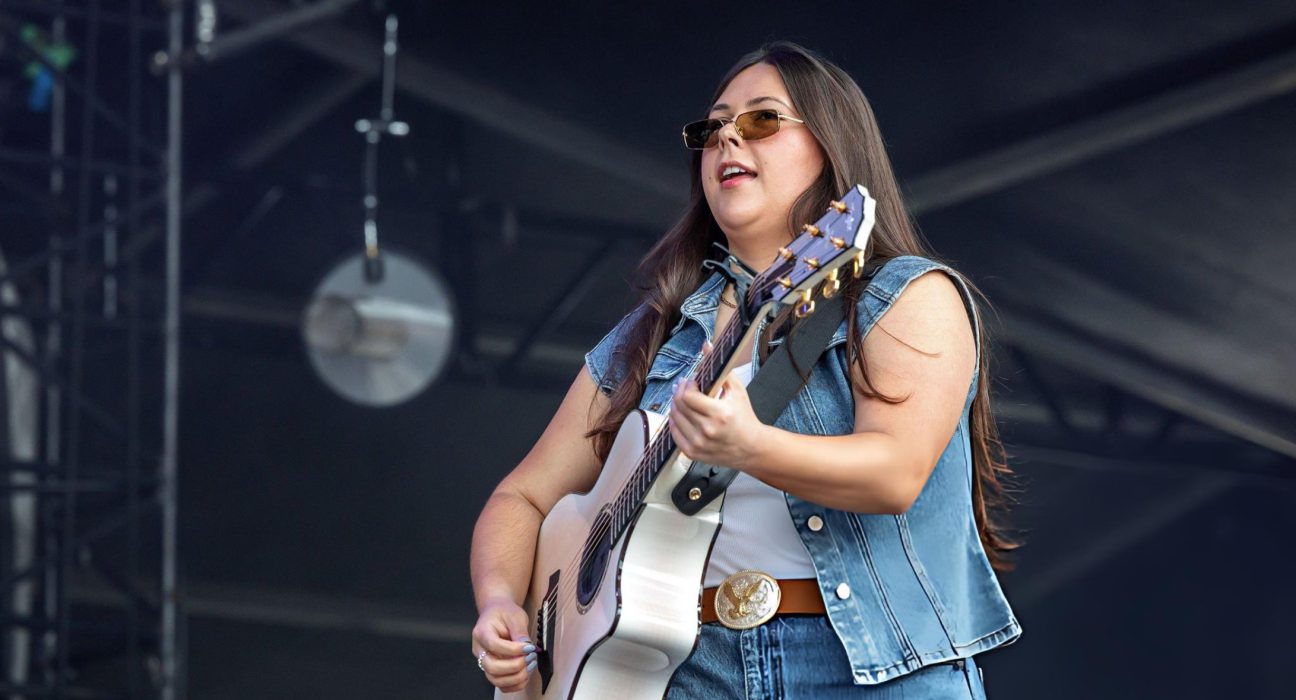
There is no other voice like Gigi Perez that is able to cut through the crowd of the 2020s indie-folk resurgence as well as Perez is able to do with her raw and unfiltered emotional power. The wide range of her distinctive alto voice allows her to transition from whispering in your ear to screaming at the top of her lungs. She has proven to be not just a viral sensation, but a writer of great depth and surprising maturity. From being raised in a religious household in Florida to having the number one song on the global charts with “Sailor Song,” Perez’s journey proves that true authenticity will always rise above the algorithms of our digital age.
By taking her deepest heartbreak and most intimate questions of faith and sexual orientation and transforming them into anthems that resonate with everyone, she has become a voice for this new generation that is trying to navigate their identities, losses and beliefs.
ROOTS AND RELIGION: EARLY LIFE IN FLORIDA
Gianna Brielle Perez (born February 4, 2000) grew up in Hackensack, NJ. Her parents are Cuban. As such, her childhood was shaped by the rich cultural traditions of Cuba; this would be reflected in the rhythmic undertones of much of her music. However, it was West Palm Beach, FL (her family moved there when she was young) that would be the formative backdrop for her childhood.
Perez’s world was defined by two elements, music and faith. While attending The King’s Academy (a private Christian School), Perez developed her performance abilities through participating in various musical productions at school and singing with the school choir. Her experience in choral music would later influence much of her own composition work, including the use of layered harmonies and hymnal structure, but with the sacred meanings removed.
The music within the home environment of Perez family members formed a universal language. Gigi’s older sister Celene is a talented opera singer who sings as a mezzo-soprano, and her discipline and love for music provided an ideal for Gigi to emulate. I always thought she was going to be that and I enjoyed watching her.” (Perez) Although Celene followed a more classical path of music; Gigi developed a sense of herself through folk and indie rock music, with the instrument being the guitar and started writing her own songs when she was fifteen years old.
Although Gigi was producing art during this time frame, Perez’ adolescent period also had its share of inner turmoil that is present in many LGBTQ youth raised in a more conservative religious environment. The tension between the development of her identity as a lesbian and the doctrine of her community would provide the fuel for her best song writing. Perez cites Hayley Kiyoko’s “Girls Like Girls” as a pivotal moment of self acceptance; it served as a beacon of representation which allowed her to make sense of the conflicting thoughts of her adolescent years.
The Berklee Interlude and the Shadow of Grief (2019–2020)
Perez chose to attend Berklee College of Music in Boston after completing high school, to further develop her musical skills. It was an indication she wanted to pursue music as a profession. Unfortunately, her time in college came to an end. In March 2020, the COVID-19 pandemic began, and it caused people around the world to stay in their homes. Millions of college students were among those whose lives were turned upside down by the crisis. Perez left Berklee and returned to Florida, which unknowingly led to the most challenging and transformative experience of her life.
In July 2020, tragedy hit the Perez family when Celene, the older sister and musical inspiration of Gigi Perez, died. The loss of Celene was earth shattering. To Perez, Celene wasn’t simply an older sibling; she was a fellow artist and soul mate. She was the one that showed Perez that she could have a career in music.
Grief consumed Perez with such a suffocating isolation that she called it “without air.”
Perez’ use of music changed dramatically. From a source of passion and enjoyment, music became a means of survival. Isolated by the pandemic and dealing with the pain of losing someone she loved, Perez locked herself away in her bedroom and began writing songs again. This time, though, they were not intended to be perfectly crafted pop songs. Instead, they were a way for Perez to process the unprocessable.
The TikTok Breakthrough: “Celene” and “Sometimes (Backwood)” (2021)
Early in 2021 Perez posted a song called “Celene” onto SoundCloud. She had also created TikTok snippets of the song. The song was a raw, and unedited, expression of grief — and was directly about her deceased sister. She stated in an interview how she began to express her pain through writing; “I just lost it. I went to my guitar, and the first few lines of that song were the things that poured out of my mouth.” “It was the first time I had ever used writing as a way to process this experience.”
The raw emotion in “Celene” captured many users on TikTok who use the application as their primary means of finding new music. They could relate to the pureness of her message — but it was her second release, “Sometimes (Backwood)”, that started to define her as an artist.
“Sometimes (Backwoods)”, released in 2021, is a perfect example of how to create an exceptional, modern indie-folk experience. The simplicity and bareness of this acoustic song allowed listeners to hear Perez’s vocals in their most raw state – smoky, layered with texture and emotion. Lyrics that dealt with depression and the need to disconnect from reality (“I love to get high / I love to get low”) spoke directly to the feeling of a generation in the midst of the pandemic struggling with the effects it has taken on their mental health. The song quickly gained traction, reaching millions of views in just a few weeks and landing Perez at number one on Spotify’s U.S. Viral charts.
Before long, the young woman who had dropped out of college to mourn in her bedroom was being courted by all of the major labels for a record deal. The rapidity of her rise to fame was dizzying. By the end of 2021, Perez had signed with Interscope Records, joining the likes of global superstars. She was living the dream, but as Perez was about to find out, the machine of a major label often doesn’t always run in harmony with true artistic expression.
The Major Label Experiment: How to Catch a Falling Knife (2023)
Perez’s time at Interscope ended when her first EP entitled “How to Catch a Falling Knife” was released on April 2023. Perez’s eight-track EP was a developed and ambitious body of work that allowed Perez to expand her sonic pallet beyond the boundaries of the acoustic environment of her home. Working with producer Jennifer Decilveo, Perez created a sonic environment that she described as being “hunter forest green”. Perez’s EP was a breakup album, however it did not exist within the traditional framework of a breakup album. Instead, the breakup album existed on a metaphysical plane. Perez used the title “How to Catch a Falling Knife”, a stock market phrase referring to purchasing an asset while its value is declining, as a metaphor for entering into a relationship where the individual knew the relationship would ultimately be unsuccessful.
Perez’s growth as a songwriter and teller of stories was evident in the two lead singles, “The Man” and “Sally.” The song “The Man” was particularly poignant, it explored the stresses of a relationship that includes a person who identifies as LGBTQ+ and how they are both under pressure, while also projecting gendered expectations upon each other. Perez referenced the American folk tradition in “Sally,” a love song about her first queer crush, which used country tinged guitars and her characteristic indie sadness to create a melancholic atmosphere.
“The Man” was also a departure from the typical break-up song, when Perez performed “Figurines” live she had no hesitation in leaving the audience with a sense of impending doom. Using the format of a traditional ballad, Perez wrote “Figurines,” about the finality of death and how every heartbreak is “just another milestone closer to being gone.” Perez used woodwind and atmospheric keyboards to create a haunting and sophisticated piece of music that hinted at the experimental side of her pop-folk style.
Although the EP had artistic success, the commercial breakthrough Interscope would have hoped for did not occur on a large scale. The “Hunter Green” era received critical acclaim but could not repeat the viral sensation of her early demo recordings. Meanwhile, Perez was also dealing with the confines of the Major Label System and she experienced the pressures of molding her sound for the radio, generating more content, and compromising on the unique aspects that made her stand out. By early 2024, Perez and Interscope had parted ways.
Liberty, “Sailor Song,” And International Stardom (2024)
Her being released from her record label could have potentially ended her career. However, she found it liberating. She went back to making music independently, as she self-produced music using close friendships and collaborations such as Noah Weinman. Her time of independence led to the creation of a song that would be defined by her entire career; “Sailor Song.”
Released in July 2024, Sailor Song became a worldwide phenomenon. The song was written in Perez’s bedroom and teased on social media before its release; it is a raucous, guitar-driven anthem that describes a sapphic romance with a woman who “looks like Anne Hathaway.” Beneath the catchy melody and playfully referenced celebrity lies a provocative and defiant theological declaration.
The chorus of the song — “I don’t believe in God, but I believe that you’re my savior” — has been at the center of conversations about culture. For Perez, it represented a rejection of the institutions that have marginalized her because of her sexual orientation and a reclaiming of “salvation” through the acts of queer love. The line “my mom says that she is worried, but I am covered in this favor,” represents a direct confrontation of the conflict between her religious background and her lived reality.
“Sailor Song” exploded on TikTok; the momentum of that explosion propelled the song onto the global charts. “Sailor Song” peaked at number 22 on the Billboard Hot 100 after debuting at #98; internationally, the song reached number one in the UK, Ireland, and Latvia. This was a rare feat for an independent artist — one who did not have the support of a major label’s promotional machinery — to top the charts with a folk song about lesbian love and religious deconstruction.
The success of “Sailor Song” also brought with it controversy. Conservative Christian groups took to social media to denounce the lyrics as blasphemy. Perez would not be deterred from this stance. In a viral video response, Perez said, “My song writing is not a democracy;” thus, firmly establishing her creative vision and integrity. As such, the controversy surrounding the song created an even greater sense of urgency for fans of the song — it became an anthem of defiance for young people identifying themselves as LGBTQ+ across the globe.
“Sailor Song” had been the smash hit but “Fable” would be the emotional core, another tribute to Celene – this time with a vocal style based on voice notes recorded by her late sister and with backing vocals by her younger sister, Bella. This song would offer an agonizingly beautiful reflection upon how loss is non-linear (“Stars blink like my sisters’ eyes”) and that Perez’s fleeting viral success rested upon an actual and lasting ability as a singer/songwriter.
At the Beach, in Every Life is the first major label record released by Perez for Island Records (through her own label, Outtahere) on April 25th, 2025. The record represented a huge success for both her and her team as it was an example of her ability to create a completely cohesive and well produced record herself, with co-producer Weinman and Aidan Hobbs. Compared to her previous release, this record took on a much grittier, rawer and more organic tone. This style of production helped emphasize the imperfections and rough edges of her vocals. Her title, “at the beach” in every life, represents her philosophy of finding calmness (“the beach”) in the midst of turmoil (“every life”).
The first thing we can take away from this is that the songs that are the most important on the album “At the Beach, in Every Life”, are all connected to the death of Celene.
1. “Sugar Water”- This is one of the albums biggest emotional focuses. It talks about how much sisters love each other. There is nothing sad or depressing about it, because it is celebrating the best parts of the time she had with Celene and Bella.
2. Twister”- This song is influenced by artists like Alex G and the musical Wicked. It uses the idea of a storm to describe good and evil. This is probably the darkest, most experimental song on the whole album. It shows how willing Perez is to make music outside of what people think she should be doing.
3. “Chemistry”- This is a fan favorite. It describes how unstable attraction is. Some of the most complex guitar playing on the entire album is featured here. It also shows how Perez can catch the tiny details of relationships (the looks you give, the times there are long periods of silence, etc.)- the static in the air.
4. “Fable”- This is a key song on the album, and it ties the project back to the origin story of her grief. The fact that Celene’s actual voice is used, creates an eerie, present feeling when listening to the record, and makes the listener a part of the love that the Perez family shares.
All publications covering “At the Beach, in Every Life” (Rolling Stone, NME), have written glowing reviews of the album. All publications were praising Perez for having avoided the “sophomore slump” (which technically would be her debut LP), and for creating a full-length body of work based on her viral hits. Many people believe she will win “Best New Artist” at the next year’s Grammys, which will solidify her place as a major player in the music industry.
The Arena Tour: Creating an Emotional Experience
Gigi Perez moved from being a bedroom artist to arena performer due to her touring schedule in 2025. Early in 2025 she toured as an opening act for Hozier. Critics felt that the pairing of Perez (as a singer-songwriter) and Hozier (who is also a singer-songwriter who uses a lot of religious imagery and political awareness) were ideal.
Hozier has been seen as a mentor of sorts to Perez. “The last time I spoke to him it was about less about music and more about questioning our own faiths and deconstructing them,” she stated in an interview with NME.
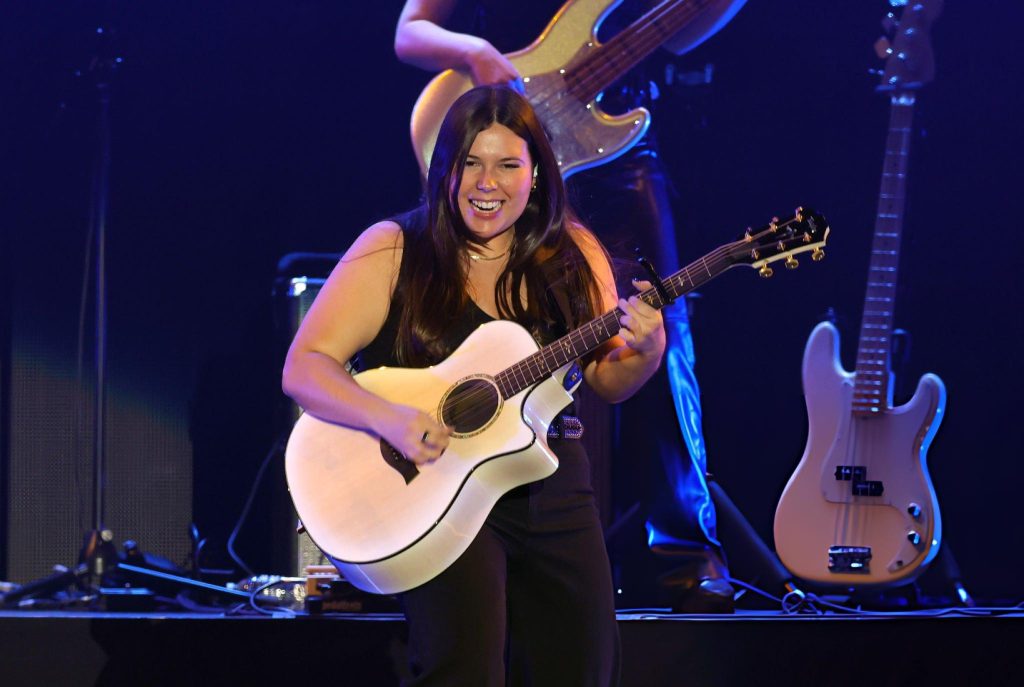
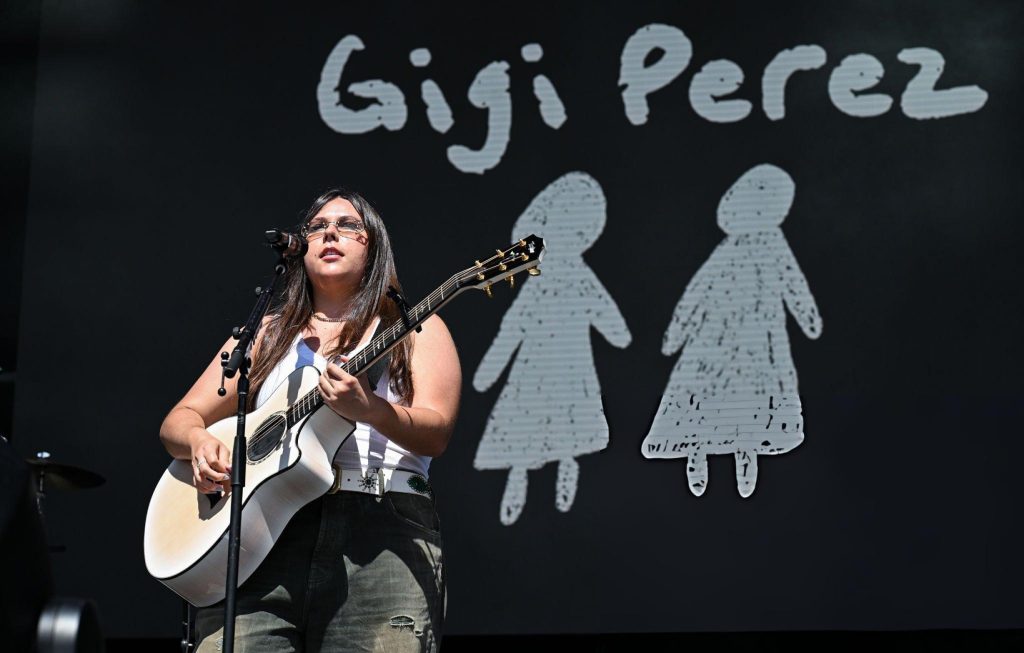
It was during this period that Perez began to develop an intense emotional connection with fans through her live performances. Unlike many artists that use live performance as a way to passively perform acoustically, Perez used her live performances as a dynamic experience. With a full band backing her, she was able to re-imagine many of the tracks off her record in much larger and more heavy rock arrangements. As with many artists that use live performance as a way to connect with fans, Perez used one of her guitars as a visual aid while on tour. This guitar was hand drawn with pictures of two girls; these drawings represent some of the lesbian themes that are present in much of her work.
On Oct. 11th, 2025 Perez performed at a sold out show at The Wiltern in Los Angeles, marking a major milestone in her career. The reviews of the show highlighted a sense of graduation or accomplishment in how Perez took command of the stage with both confidence and vulnerability. Many times during the show Perez would stop the music to address the audience members regarding the loss they have experienced and create a space for all the fans to heal together. When performing “Sailor Song”, the audience would often sing along and their voices would be louder than hers, an example of how well-known the song is and what a fan favorite it has become.
She also became a festival regular and delivered some of her best shows at both the Minnesota Yacht Club Festival and at Austin City Limits. She talked to the crowd at austin about how surreal it was for her – how losing her sister had led to an unintentional doorway for a life she could have never imagined. “i’ve built a whole new life with my grief”, she said to the los angeles times backstage.
Gigi Perez’s Rise to Fame Mirrors Larger Cultural Moment Known as “Sapphic Pop”
However, while other acts that have emerged during this time (e.g., Chappell Roan, Muna, Girl in Red) are often compared to each other based on their shared reliance on synth-pop, or their aesthetic of camp, Gigi Perez has always been a part of a different musical genre; that being, folk. Unlike many of her peers who produce very polished, high-end pop music, Perez’s music is much more raw and organic, and therefore feels more like a campfire confession than a dance party.
Musical Genre:
The musical style that Perez uses is directly related to the legacy of many influential indie-folk bands. For example, the use of layered vocals and the use of falsetto are both stylistic elements that were first introduced by Bon Iver, and Perez uses them similarly. Similarly, Perez’s complex lyrical storytelling is similar to that of Fleet Foxes and Sufjan Stevens in how she has woven together elements of biblical allegory with elements of her own personal story. However, unlike these influences, Perez’s music is distinctly Gen-Z in that it is genre fluid, and she has no issue using digital production techniques such as auto-tune (“Celene”) in order to create her sound, which is structured for an audience whose focus is on the ability to consume content quickly through the use of streaming services, but does not sacrifice depth.
The Lyrical Themes of Perez are Grief, God and Girls (with Grief being the main theme)
- Grief: Perez views grief not as something to be gotten over, but rather as a place she inhabits. That she refuses to give the usual empty reassurance to “move on”, she has become a solace to many people who are grieving.
- God: Perez’ connection to religion is through deconstruction of it, rather than just rejecting it. She uses the language of the church — such as words like “savior”, “favor”, “hymn” — to talk about non-religious and queer experiences. She takes back sacred language for the benefit of people who have been excluded by religious organizations.
- Girls: Perez’ love songs are openly queer, however, she avoids the “othering” found in some LGBTQ music. Perez writes love songs in a way that is universal enough for any person to insert their self into her story lines, while at the same time not hiding the fact that her loves are of the same sex.
Conclusion: The Girl Who Believed
Gigi Perez is on the cusp of becoming a superstar in 2026. She has braved the dangers of instant-fame and escaped the ‘burn-out’ of the large-label recording industry to emerge as a self-sufficient force in music, with a #1 single and a critically-acclaimed album.
More important than all the awards and streaming numbers, however, is what Perez has created: a bridge to her fans that exists outside the boundaries of traditional “artist/fan” relationships. Perez is the artist of record for the “in-betweeners,” those caught in the middle of faith and doubt; of loss and healing; of the person they were supposed to be, and the person they actually are.
The song ‘Fable’ she says: ‘Love was the law, Religion was the teacher / I’m Not Bought.’ She sings this as an expression of her freedom from being controlled by others; both in her personal life and in her artistic work. Gigi Perez has evolved beyond just being the girl that went viral singing in her bedroom; Gigi Perez is now a strong, sustainable force in the world of American Music, and reminds us all that music can always be found even when we are at our most lost; and often, you have to let things fall apart before you can create beauty.